The Friends' North Pikes Creek Wetlands 5-year forest improvement project is made possible by the dedicated work of an extraordinary group of community volunteers who care about the continued health of our forests and waters.
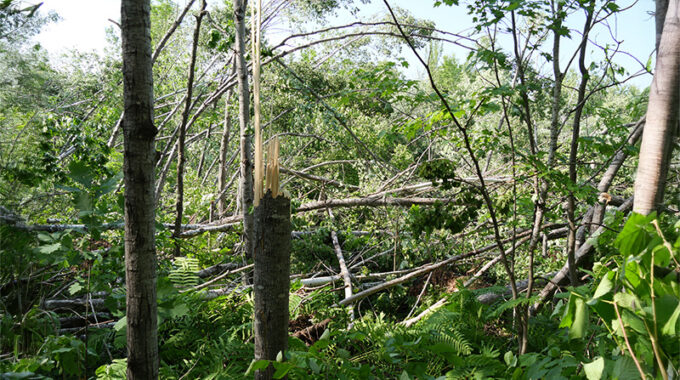
Salvage and Remediation work begins at Beaver Hollow
On June 21st of last year, a straight-line wind skipped across the Bayfield peninsula causing damage at several locations, including at the Friends’ Beaver Hollow property. Approximately 7-acres of forested landscape suffered severe tree damage. Luckily, there was a limited amount of damage to the developed area of the property.
The Friends have engaged a forest management company to salvage the down and damaged trees on the property. After this work is complete, the remaining stumps will be buried, and the slash will be moved into piles to provide wildlife habitat. The Friends will capitalize on this unfortunate weather event by taking this opportunity to create an area of young forest habitat. Currently, all the forest on the property is approximately the same age, so this restoration initiative will enhance the overall forest biodiversity of the site.

Following the timber salvage and brush clearing, the aspen will regenerate and create an early successional forest habitat that will nurture some of the over 60 Wisconsin wildlife species that rely on young forests. This forest type features dense thickets of small trees, shrubs, and wildflowers that offer abundant food, and dense cover for safe hiding spots. The Friends plan to augment nature’s restorative efforts in the impacted area next spring with strategic plantings of native fruit bearing shrubs and mast producing trees.
Early successional forest is highly biodiverse. Bird species that prefer to nest in young forest and brush habitats include many warblers – golden-winged, chestnut-sided, Nashville, mourning – and ground nesting birds like ruffed grouse and American woodcock. In a young forest, pollinators like butterflies, native bees, and moths thrive on the nectar of multiple species of flowering plants, while mammals use the area for hunting and cover. Coarse woody debris and damp undergrowth serve as critical microhabitats for reptiles and amphibians. Creating young forest habitat is crucial because of the steady decline of this important forest type in recent decades.
Related Posts