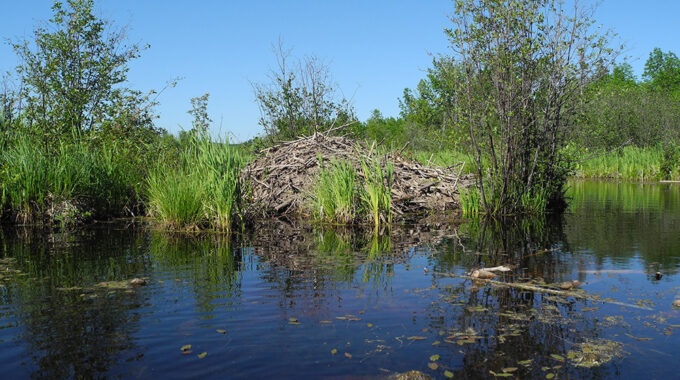
Dr. Emily Fairfax's Presentation, "Wisconsin's Beavers: Balancing Benefits and Conflict Management," can now be viewed.
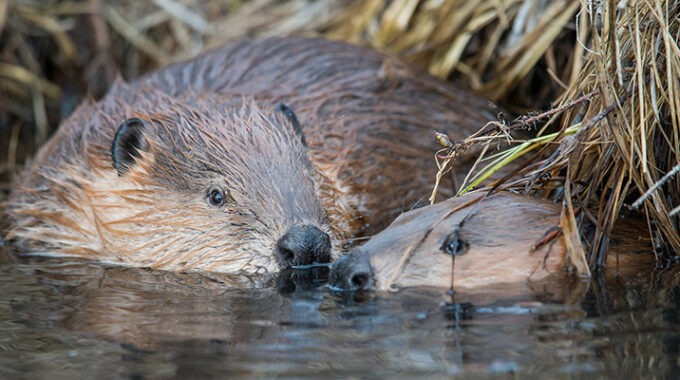
Opportunity to speak up for Beavers!
Let the DNR know that you support beavers!
Public Input Form: The Wisconsin Department of Natural Resources (DNR) is seeking public input as they update the state’s Beaver Management Plan. You may fill out and input an online Public Input form (https://www.research.net/r/WIBeaverManagement)) anytime from today through 11:59 p.m. Saturday, Jan. 31
Here are a few tips for those unfamiliar with the current Beaver Management Plan to help you understand questions on the form:
- Beaver zones should be designated by watershed rather than arbitrary highway lines on a map.
- The Wildlife Management Program needs to be revised to manage wildlife by ecosystems, not individual species.
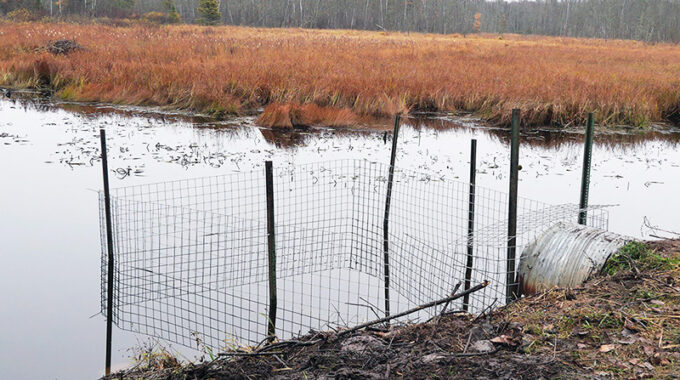
- Non-lethal management, in most cases, can successfully resolve an issue, like a flooded farm field or yard, blocked culvert, or tree damage. Currently, lethal management- killing beaver- is the first line of action.
- Trapping today is completely unregulated with no bag limits and no required reporting. It’s important to note that the DNR has no accurate estimate of the beaver population in the state.
Public Listening Sessions: Three listening sessions will also be held in January – two in person and one over Zoom.
- Public listening session Wednesday, 14, from 6-8 p.m.
Hayward Holiday Inn Express and Suites
15586 County Road B
Hayward, WI 54843
- Public listening session Wednesday, 21, from 6-8 p.m.
Milford Hills
W5670 French Road
Johnson Creek, WI 53038 - Virtual Public listening session Wednesday, Jan. 28, from 6-8 p.m. Virtual Session via Zoom: Register online
Those interested in providing comments must register in advance.
Following are some facts to help you write suggestions in the text box at the end of the input form, or to use if you attend a listening session.
Multiple scientific studies from outside Wisconsin have proven that beavers, their dams, and the wetlands they create:
- usually cool, rather than warm, streamwater
- capture, rather than create siltation
- allow fish passage up and down stream channels
- remove nonpoint source pollution
- store water on the landscape, recharging groundwater reserves
- mitigate flooding
- ameliorate drought by slowly releasing water stored in the ground
- suppress wildfires
- reconnect damaged streams to their floodplains, a hallmark of a healthy watershed
Attend a public listening session or Fill out the public input form to let the DNR know that you care about Beavers and the important wetland landscapes they create!

Related Posts