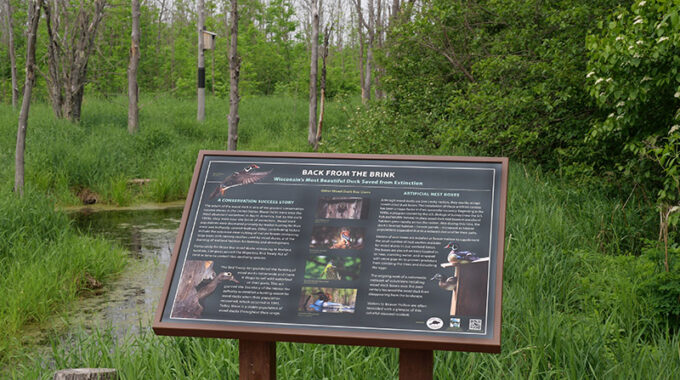
The interpretive sign newly installed on the second boardwalk platform at Beaver Hollow tells the story of the near extinction and eventual recovery of the wood duck.
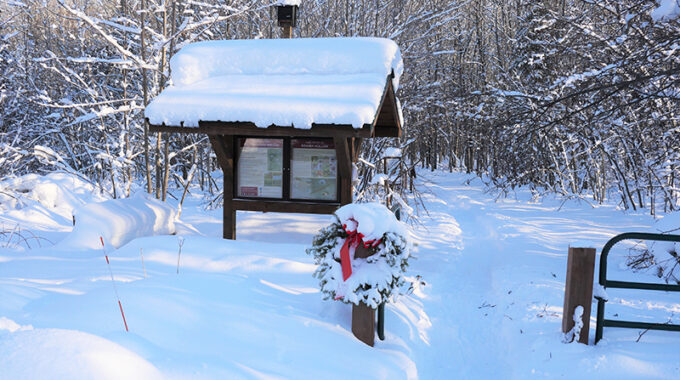
Beaver Hollow Wildlife in Winter
Wildlife employ a variety of strategies for surviving winter’s snow and cold. Some species put on heavy winter coats and stay in place, some fly south to warmer climes, and a few just sleep through the winter and wait for warmer weather to arrive in spring. If you know where to look, you’ll discover that Beaver Hollow remains full of fascinating wildlife, even in the coldest months. Look carefully and you may spot a cavity, den, or lodge of a Beaver Hollow winter resident.
Beavers are unique in that they modify their habitat to survive the cold. Their winter adaptation is much like that of the early settlers of this northern land. They live in a home that stays warm. They eat from a larder of cached food – tree branches – that they store underwater in the fall in anticipation of the pond freezing over. Beavers do move around underwater in the winter, but rarely come out of their pond until spring.

Otters, like beavers, live in warm dens during the winter, but for otters, it’s a bank den. Their preferred winter food – fish – remains accessible under the ice all winter. Otters will also eat small mammals when the opportunity arises. Otters leave distinctive tracks in the snow as they travel through the wetlands and along the creek. Interestingly, they sometimes travel long distances through the woods. Otters are known for being playful, and are occasionally spotted sliding in the snow, or chasing one another. Otters are active during the day in winter, and there’s a chance you will see one, or its tracks, at Beaver Hollow.

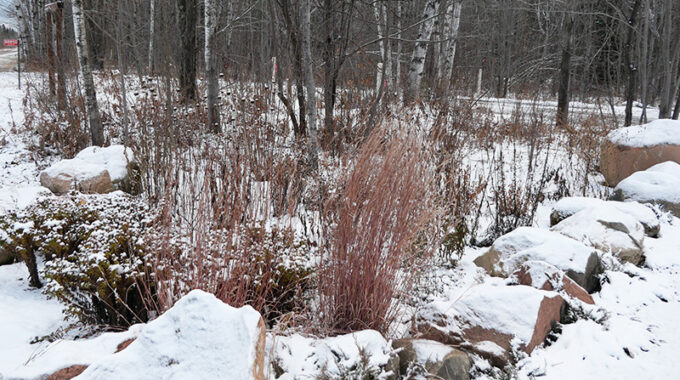
Insects survive winter in our green waste piles. Most bees and wasps live inside dead plant stems or create small nests beneath the soil in the winter. Many beneficial pollinators, such as butterflies, fireflies, and ground beetles, shelter in places safe from predators, such as leaf litter, brush piles, or rock piles. We’ve incorporated these natural nesting habitat features into the landscape at Beaver Hollow to provide winter habitat for pollinators.

Small mammals like mice, voles, and shrews, spend winter under the snow in an area called the subnivean zone – the insulated space between the ground and the snowpack. They travel through small tunnels they’ve dug through the snow, searching for insects and seeds. We’ve inadvertently created a large subnivean zone under the boardwalk at Beaver Hollow. The large space is also used by rabbits and weasels, or an occasional ruffed grouse lodging overnight.

Bears sleep through the winter. To survive winter when natural foods like berries, nuts, and insects disappear, bears find a den site in a hollow log, rock crevice, cave, or under tree roots. Black bears enter a state of torpor during winter- which is not true hibernation. Their metabolism, heart rate, and breathing slow significantly while surviving on their fat reserves. Females birth cubs during this time.

Cavity nesters, including fishers, martens, raccoons, and squirrels, remain active all winter. They typically shelter in tree hollows or cavities, dens, ground burrows, or man-made nest boxes that provide crucial warmth needed to reduce energy loss. The mature forest areas of Beaver Hollow provide the large standing snags, fallen logs, brush piles and other habitat structures that these winter residents require for shelter.

Larger mammals – wolves, coyotes, bobcats, and foxes – remain active in the winter. They survive the cold by growing a thick, multi-layered coat of fur. They use available dens – hollow logs, tree cavities, underground dens – or shelter under the thick lower branches of conifers. These carnivores hunt small mammals that are also active in the winter, particularly rabbits, squirrels, voles, shrews, and mice. Our trail cameras frequently capture these winter residents moving through the forest.

Migratory species, such as waterfowl and songbirds, travel south in fall to find warmer climates with adequate food sources. They return in spring to breed and raise their young, following an annual cycle driven by food availability and suitable breeding grounds. Geese and herons are the first to arrive at Beaver Hollow in the spring, followed shortly by wood ducks and mallards.

However you spend your winter, have a happy holiday season!
Related Posts